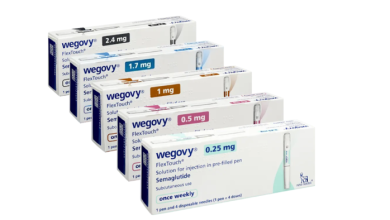
Peptides have moved well beyond being a subject discussed only in specialist laboratories. Search interest has grown, more UK suppliers have appeared online, and terms that once belonged mainly in research papers are now regularly seen across science websites and online communities.
That extra attention has a downside. Finding peptides online is easy. Determining the actual supply, testing methods, and trustworthiness of the documentation proves to be significantly more challenging.
For UK researchers, the useful question is therefore becoming less about who has the biggest catalogue and more about what sits behind each vial.What Exactly Are Peptides?
Peptides are short chains of amino acids. They occur naturally in biological systems and are involved in a wide range of cellular and biochemical processes.
The difference between a peptide and a protein is not always as neat as a single definition might suggest, although peptides are generally smaller and contain shorter amino acid chains.
For researchers, this relatively compact structure is one reason peptides are interesting. Different sequences can be investigated for their interactions with receptors, enzymes, signalling pathways and other biological mechanisms.
This has led to research involving a broad range of compounds, including BPC-157, TB-500, GHK-Cu, CJC-1295, Ipamorelin, MOTS-c, Semax, Selank and many others.
That does not mean every peptide sold online is an approved medicine. Far from it. A compound supplied for laboratory research should not quietly be presented as something intended for self-treatment.
That distinction matters.
The UK Peptide Market Is Getting Busier
A few years ago, UK researchers looking for specialist peptides often had limited options. Ordering internationally was common, bringing longer delivery times, customs uncertainty and sometimes very little information about where a product had come from.
There are now more UK-based suppliers, which has made access easier. But a larger market does not automatically mean a better one.
Two websites can sell a vial with exactly the same peptide name and stated quantity while providing very different levels of supporting evidence.
One may show a recent batch-specific Certificate of Analysis. Another may display little more than a purity percentage beside a product photograph.
Those are not equivalent.
When assessing a UK peptide supplier, the website design is probably one of the least interesting things to look at. The more revealing questions concern testing, batch identification, storage information and traceability.
A Purity Percentage Needs Some Context
You will regularly see peptide products advertised as “98%+” or “99% pure”.
The number looks reassuring, but on its own it says surprisingly little.
How was the sample analysed? Which laboratory carried out the work? When was it tested? Does the report relate to the batch currently being supplied? Is there enough information on the document to connect it with the product?
These details turn a marketing claim into something that can actually be examined.
High-performance liquid chromatography (HPLC) is commonly used when assessing peptide purity. Liquid chromatography-mass spectrometry (LC-MS) can provide additional information, including evidence relating to molecular mass and identity.
They answer different questions, which is why seeing proper analytical documentation is more useful than seeing a large “99% PURE” badge on a product page.
Researchers should be able to inspect the evidence rather than simply being asked to trust the percentage.
Batch-Specific COAs Make a Difference
A Certificate of Analysis, usually shortened to COA, is one of the first documents many researchers look for.
However, the existence of a COA is not automatically enough.
A useful report should be connected to an identifiable batch. If a supplier continues using the same generic laboratory report while stock changes repeatedly, it becomes difficult to know whether that document represents the vial currently being offered.
Batch numbers help close that gap.
Ideally, the batch information shown on the product or vial should correspond with the supporting analytical documentation. Researchers can then verify the material associated with the particular batch rather than relying on a general statement about the product.
Independent analysis is also worth looking for. Testing performed by a laboratory separate from the seller gives researchers another layer of information when evaluating a product.
No analytical test makes research material magically perfect, but transparent documentation makes it much easier to judge what is actually being supplied.
UK Dispatch Is About More Than Speed
Fast domestic delivery is obviously convenient. Nobody wants a laboratory project delayed because a parcel has spent weeks moving between countries.
But dispatch is not simply a question of whether something arrives the next day.
Packaging matters too.
Peptides can be sensitive materials, and researchers need clear information about how products should be stored and handled. Labels should be readable, quantities should be stated clearly, and individual products should be easy to identify after delivery.
A professional research supplier should make these details straightforward rather than leaving customers to hunt through old emails or guess from an unlabelled vial.
There is also something reassuringly ordinary about good fulfilment: the correct item arrives, the batch is identifiable, the packaging protects it and the paperwork makes sense.
It is not glamorous, but it matters.
Research Use Only Should Actually Mean Research Use Only
One of the most significant problems surrounding online peptides is blurred language.
A website may describe products as being for “research use only” while surrounding them with dosage suggestions, personal transformation claims or language that clearly points towards human use.
That creates an obvious contradiction.
If a peptide is being supplied strictly as research material, the rest of the website should reflect that position. Product descriptions can discuss analytical characteristics, research context, storage, available documentation and published scientific literature without turning into instructions for personal use.
UK researchers should also distinguish research compounds from licensed medicines. The two categories should not be treated as interchangeable simply because a compound is being discussed online.
Clear boundaries are better for researchers and, ultimately, better for the credibility of the sector.
Look Beyond the Product Page
A useful peptide website should provide researchers somewhere to go when they want more than a price and an “add to basket” button.
That might include explanations of testing methods, a peptide glossary, guidance on reading analytical reports, laboratory handling information and links to published research.
References are particularly helpful.
High-quality scientific content does not need to pretend that every question has a settled answer. In many areas of peptide research, evidence is still developing. Human studies may be limited or absent, while much of the available work may come from laboratory or animal models.
Saying so is not a weakness. It provides the reader a more accurate picture.
Researchers can then follow the cited literature, look at study design and decide how relevant the evidence is to their own work.
Choosing Peptides in the UK
There is no shortage of bold claims in the peptide market. The more useful signals are usually quieter.
Look for traceable batches. Verify whether analytical reports are available. See whether testing methods are explained. Read the storage and handling information. Pay attention to whether the supplier clearly separates laboratory research from medical use.
Even small details can be revealing. Does the batch number on a COA make sense? Is the report recent? Can you identify the testing laboratory? Are research limitations acknowledged, or does every product description sound like a sales pitch?
A supplier willing to show its workings gives researchers something tangible to evaluate.
That is becoming increasingly important as the UK peptide market expands.
The future of the sector will not be decided by who can put the largest purity percentage on a homepage. Researchers are becoming more careful about documentation, provenance and analytical evidence.
And that is probably a healthy direction for the market to take.
Research notice: Peptides discussed in this article may be supplied for laboratory and research purposes only. Research materials should not be treated as medicines or used for human consumption. Researchers should verify the regulatory status and appropriate laboratory requirements relevant to their work.